Kitchen cleaning services in Glendale
Kitchen Cleaning Services
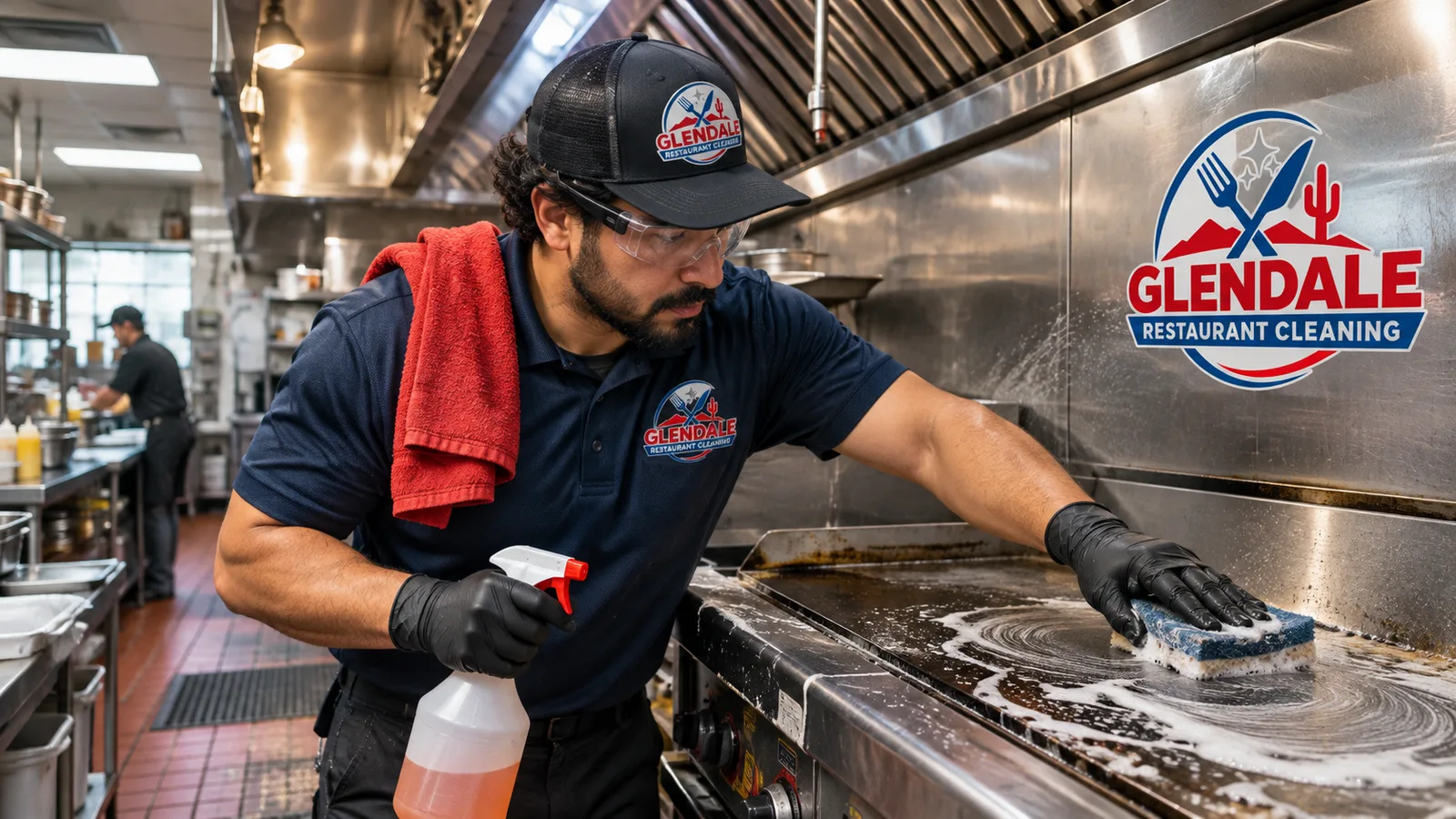
Detailed commercial cleaning for restaurant equipment, food-preparation surfaces, floors, walls, and hard-to-reach work areas, scheduled around your operating hours.
For commercial food-service kitchens
Planned around equipment and access
Scheduled around operating hours
Cleaning planned for your kitchen
Commercial Kitchen Cleaning Built Around Your Operation
Kitchen Cleaning Services should address the places that daily closing routines cannot fully cover. Glendale Restaurant Cleaning removes accumulated grease, food residue, dust, and soil from agreed kitchen areas using a written scope tailored to the equipment, layout, and condition of the space.
A restaurant kitchen needs a practical plan. Prep tables may require food-contact-safe procedures, while fry lines, equipment sides, floor edges, and wall junctions often need stronger degreasing and agitation. We identify what will be cleaned, what must cool or be disconnected, and which items need to be moved by restaurant staff before work begins.
Our team works from 5511 North 51st Avenue in Glendale. As a restaurant company Glendale homeowners rely on, we bring the same careful planning and respect for occupied property to every scheduled kitchen cleaning assignment. The scope remains focused on commercial food-service work areas and the conditions found inside them.
Practical service scope
What Professional Kitchen Cleaning Can Cover
A commercial kitchen deep cleaning may include cooking-line exteriors, stainless steel surfaces, prep tables, shelving, sinks, backsplashes, washable walls, floor edges, drains, and accessible spaces beneath or beside equipment. The exact list is established before service because every kitchen has different equipment and access limits.
Kitchen equipment cleaning commonly addresses removable grates, knobs, drip trays, exterior panels, legs, casters, and reachable surfaces around ranges, ovens, fryers, griddles, refrigerators, and freezers. Equipment interiors, electrical components, gas connections, hood ducts, and fire-suppression systems require separate approval or qualified specialist work. Our crew does not disassemble or reconnect regulated systems unless that work is explicitly within the agreed scope and appropriate for the equipment.
We match the method to the surface. Typical methods include dry soil removal, alkaline degreasing where suitable, dwell time, hand agitation, scraping with surface-safe tools, controlled rinsing, and microfiber wiping. Product labels and equipment manufacturer instructions govern dilution, contact time, and material compatibility.
Grease-Prone Cooking Lines
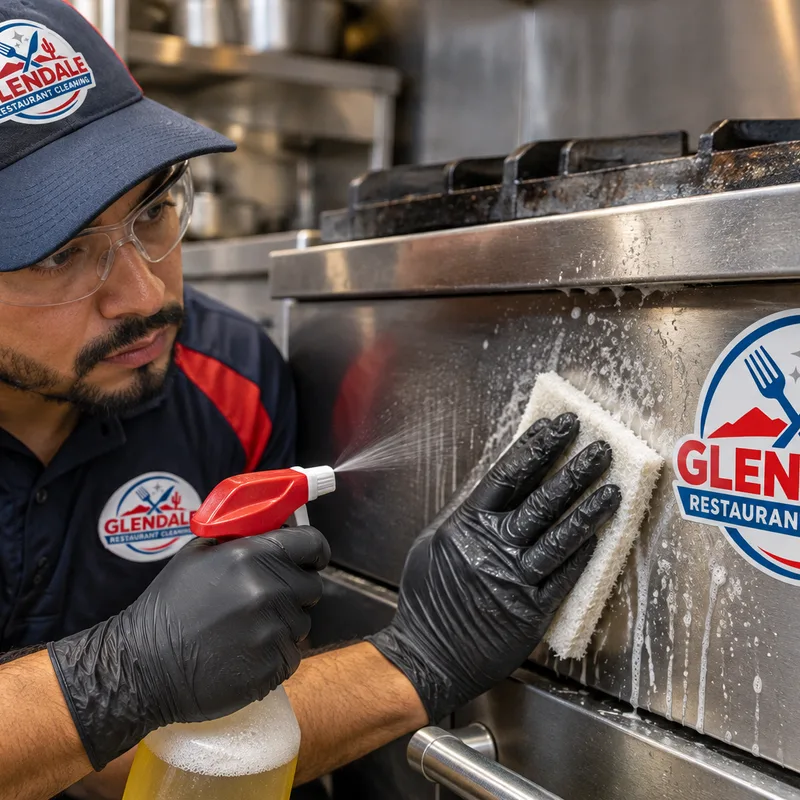
Fryers, griddles, ranges, and nearby surfaces collect sticky residue that traps additional soil. Cleaning plans account for safe cooldown, product dwell time, and access between appliances.
Food-Preparation Areas
Prep tables, sinks, shelving, and washable contact surfaces need methods appropriate for their use. Cleaning chemicals are applied and removed according to label directions.
Floors, Edges, and Drains
Soil gathers beneath equipment, at wall junctions, around legs, and near drains. Agitation and controlled moisture help remove buildup without spreading dirty solution through the kitchen.
Equipment Exteriors
Exterior panels, handles, casters, and accessible undersides receive detailed attention while controls, wiring, burners, and sensitive openings are protected.
Walls and Backsplashes
Washable vertical surfaces behind prep and cooking areas can be degreased using products and tools chosen for the finish, sealant, and surrounding equipment.
Recurring Maintenance
Scheduled service keeps heavy-soil areas from returning to their starting condition. Frequency is based on menu, cooking volume, operating schedule, and staff cleaning routines.
Cleaning for local conditions
Commercial Kitchen Cleaning in Glendale Conditions
Glendale's hot, dry climate makes dust control a practical concern, especially near receiving doors, exterior openings, rooftop air movement, and equipment with exposed upper surfaces. Dust can combine with airborne grease and form a film that ordinary wiping leaves behind. Detailed cleaning should therefore address high ledges and equipment tops when they are safely accessible, rather than concentrating only on eye-level stainless steel.
Restaurant settings also differ across the city. Kitchens near the Westgate Entertainment District may need service arranged around event-driven operating hours. Downtown Glendale restaurants often work within established commercial buildings where tighter layouts can limit access behind equipment. Arrowhead-area dining locations may have later customer traffic, making overnight or off-hour scheduling more practical. These operating conditions affect staging and timing, not the standard of work.
Glendale restaurants operate within Maricopa County's food-safety jurisdiction. Cleaning supports sanitation efforts, but it does not replace employee food-safety procedures, pest control, equipment repair, or an inspection by the appropriate authority.
Our cleaning process
How Our Kitchen Cleaning Services Work
-
Step 1 of 5
Walk Through the Kitchen
We review the cooking line, prep areas, floors, sinks, storage surfaces, and equipment access. You can identify recurring trouble spots and areas that require special handling.
-
Step 2 of 5
Set the Written Scope
The plan lists included areas, exclusions, access requirements, timing, and preparation responsibilities. We also establish whether equipment must be cool, empty, unlocked, or moved before arrival.
-
Step 3 of 5
Prepare and Protect
Food and movable utensils are cleared by restaurant staff as agreed. Cleaners stage tools, protect sensitive components, place caution markers, and separate clean supplies from used materials.
-
Step 4 of 5
Degrease and Detail
The crew removes loose debris, applies compatible products, allows the required dwell time, agitates stubborn buildup, and wipes or rinses surfaces using controlled methods.
-
Step 5 of 5
Review Completed Work
We inspect the areas included in the scope and flag damage, inaccessible soil, or maintenance concerns that cleaning cannot correct. Recurring schedules can then be adjusted around actual soil levels.
Compare the scope, not just the promise
Choosing a Kitchen Cleaning Company
Ask each kitchen cleaning company for a scope specific enough to compare. It should identify equipment, surfaces, cleaning methods, exclusions, restaurant preparation duties, and the expected service window. A vague promise to clean the whole kitchen can lead to disagreement about interiors, movable appliances, high areas, drains, and spaces blocked by fixed equipment.
Professional kitchen cleaning also depends on communication. Tell the crew about damaged seals, loose tiles, exposed wiring, pilot lights, sensitive controls, or equipment that cannot be moved. Share manufacturer restrictions when a surface requires a particular chemical or cleaning method. If cleaning will happen after closing, confirm entry, alarm, lighting, water, drainage, and lockup arrangements in advance.
Restaurant kitchen cleaners in Glendale should understand that service timing affects prep and reopening. Enough time must be allowed for equipment to cool before cleaning and for cleaned areas to dry before staff return. Glendale Restaurant Cleaning builds these conditions into the plan rather than leaving them for the crew to resolve after arrival.
Request a CallbackA clear scope makes deep cleaning easier to schedule and easier to verify. Tell us which equipment and work areas need attention, how the kitchen operates, and when access is available.
Call for a Free QuoteScope, timing, and preparation
Questions About Commercial Kitchen Cleaning
How much do commercial kitchen cleaning services cost in Glendale?
Pricing depends on kitchen size, grease level, equipment count, access, and the depth of cleaning requested. A compact prep area with accessible surfaces takes less labor than a high-volume cooking line with buildup behind several appliances. Off-hour access, required equipment movement, and specialized surface care can also affect the estimate. Glendale Restaurant Cleaning reviews the actual work areas before confirming a written price.
How long does restaurant kitchen cleaning take?
A defined cleaning of selected equipment or prep areas may take several hours, while a full commercial kitchen deep cleaning may require a longer overnight service or more than one visit. The duration depends on soil condition, cooldown time, crew access, and whether restaurant staff have emptied and prepared the equipment. Kitchens near Glendale's event areas should also account for late closing and delivery schedules.
Can cleaning be scheduled after the restaurant closes?
Yes, off-hour and overnight scheduling may be arranged when access, security, utilities, and lockup responsibilities are confirmed in advance. This is often practical for Glendale restaurants with long service hours because cleaners can work without crossing active cooking or prep traffic. Equipment still needs sufficient cooldown time before degreasing begins.
Do you clean inside ovens, fryers, refrigerators, and other equipment?
Equipment interiors can be included only when the specific appliance, condition, and manufacturer requirements are reviewed and listed in the scope. Food, oil, racks, pans, and stored goods may need to be removed first. Electrical, gas, refrigeration, hood, and fire-suppression components are excluded unless qualified work has been separately arranged.
How often should a restaurant schedule professional kitchen cleaning?
Frequency should be based on cooking volume, menu, grease production, equipment arrangement, and the effectiveness of daily staff cleaning. High-use fryer and griddle areas generally need more frequent attention than low-soil storage surfaces. Glendale dust can also collect on upper ledges and combine with grease, so those areas should be reviewed when setting the schedule.
Will commercial kitchen cleaning prepare us for a health inspection?
Professional cleaning can improve the condition of included surfaces, but it cannot guarantee an inspection result. Maricopa County requirements also involve food handling, temperatures, storage, employee practices, pest control, equipment condition, and other operational matters. Restaurant management remains responsible for ongoing compliance and correcting maintenance or food-safety issues.
What should our staff do before the cleaners arrive?
Staff should remove exposed food, utensils, small appliances, and personal items from the agreed work areas. Equipment should be shut down and cooled as directed, while locked rooms and approved water and electrical access should be available. The preparation list is confirmed with the scope so the crew can begin without disrupting sensitive items.
Plan your kitchen cleaning
Plan a Cleaner Commercial Kitchen
Describe the equipment, work areas, current buildup, and preferred service window. We will help define a practical cleaning scope for your Glendale restaurant.