Restaurant cleaning services in Glendale
Restaurant Cleaning Services in Glendale
Detailed cleaning for dining rooms, bars, restrooms, floors, and back-of-house work areas, scheduled around your operating hours.
For Glendale food-service operations
Planned around traffic and surfaces
Scheduled around operating hours
Cleaning planned for your restaurant
Restaurant Cleaning Services Built Around Your Operation
Restaurant Cleaning Services should support the way your restaurant works, rather than disrupt it. Glendale Restaurant Cleaning develops a written scope around your floor plan, service hours, traffic patterns, surfaces, and recurring trouble spots. That scope can cover guest-facing areas, employee work zones, or the entire restaurant.
During agreed service windows, a professional restaurant company in Glendale, AZ performs the work using a repeatable checklist. Managers know which areas are included, which tasks occur every visit, and which detailed tasks rotate on a weekly or periodic schedule. We can also identify exceptions that need approval, such as heavy buildup, post-event cleanup, or access to a secured room.
Glendale's dry climate brings fine dust through entrances, patio doors, and ventilation systems. During summer monsoon activity, tracked grit and moisture can add to floor care demands. A useful plan accounts for these conditions by giving entry floors, ledges, vents, baseboards, and high horizontal surfaces the attention they need.
Guest-facing cleaning priorities
Front of House and Dining Area Cleaning
Restaurant Dining Room Cleaning
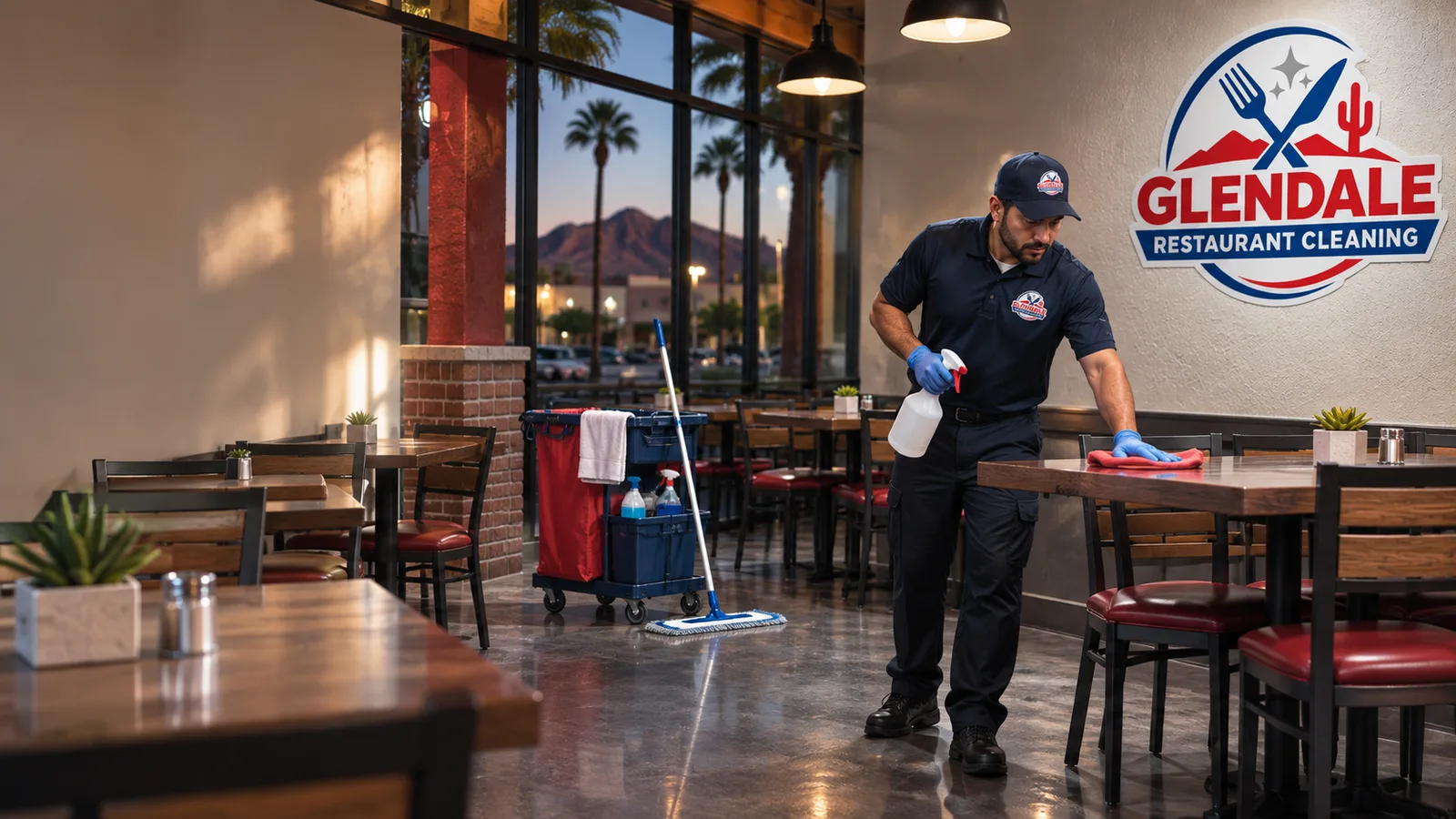
Dining Area Cleaning can include tables, chair frames, booths, partitions, host stands, ledges, baseboards, interior glass, and reachable fixtures. Food debris, fingerprints, crumbs, and dust are removed with methods suited to each surface.
Restaurant Floor Cleaning
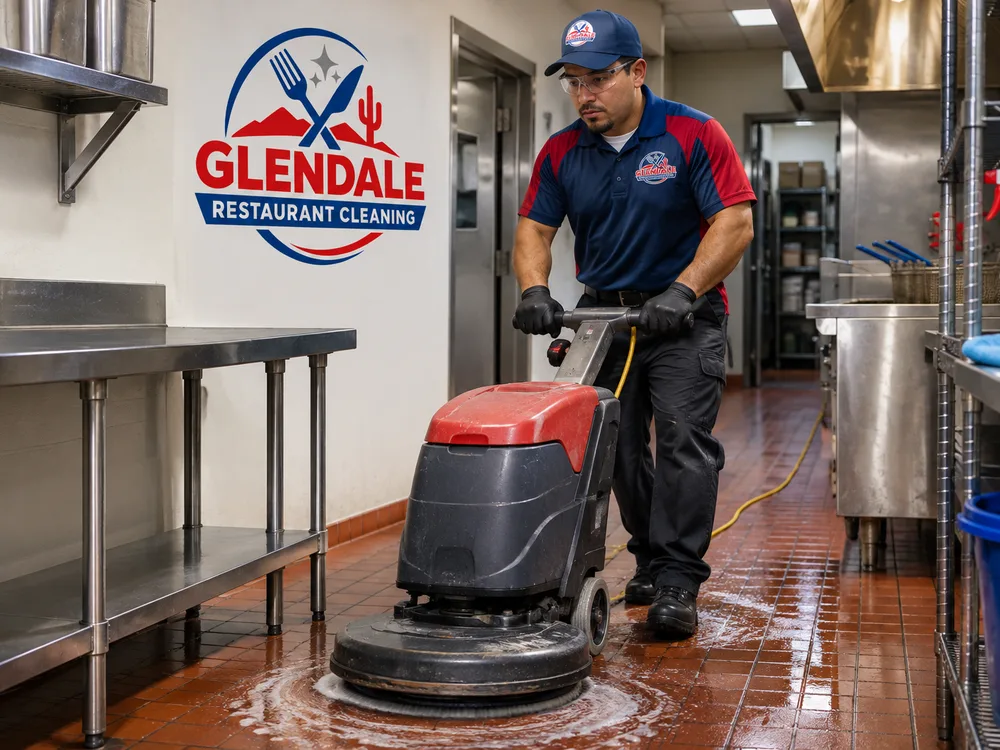
Floor care is matched to the material and soil load. Typical work includes vacuuming carpet, sweeping and damp mopping resilient flooring, cleaning tile, and giving extra attention to corners, edges, traffic lanes, and the area around movable furniture.
Restaurant Bar Cleaning
Bar cleaning addresses counters, stools, foot rails, cabinet faces, mats, sinks, reachable shelving, and surrounding floors. The scope can distinguish between surfaces handled by restaurant staff during service and tasks assigned to the cleaning crew.
Entry and Waiting Areas
Glass doors, handles, host areas, mats, and entry floors receive frequent guest contact. Cleaning these touchpoints and removing tracked grit helps the first part of the restaurant remain presentable.
High Dusting
Scheduled High Dusting removes buildup from vents, pipes, beams, tops of partitions, tall ledges, and accessible light housings. The work should use appropriate extension tools and controlled dust removal so debris does not settle onto prepared surfaces.
Patio Transition Areas
Restaurants with outdoor seating often need added attention near doors and floor transitions. Dust, leaves, grit, and tracked residue can collect quickly where patios connect to indoor dining rooms.
Included back-of-house details
Back of House Cleaning With a Defined Boundary
Restaurant Back of House Cleaning in Glendale can cover prep-area floors, employee corridors, storage-area floors, washable wall surfaces, utility spaces, and exterior faces of equipment. The exact boundary matters. Cleaning around food, hot equipment, chemicals, and active prep requires coordination with restaurant management.
A sound scope identifies which equipment must be switched off or cooled, what restaurant staff remove before service, and whether cleaners may move floor mats or lightweight items. Degreasing methods should fit the surface, with adequate dwell time followed by agitation and removal. A degreaser that works on sealed tile may be wrong for aluminum, painted finishes, or natural stone.
Routine janitorial cleaning is separate from hood, duct, fire-suppression, pest-control, and specialized equipment service. Glendale Restaurant Cleaning can keep the assigned back-of-house areas on a recurring schedule while your qualified vendors handle work outside that scope.
Cleaning, disinfecting, and restocking
Restaurant Restroom Cleaning in Glendale
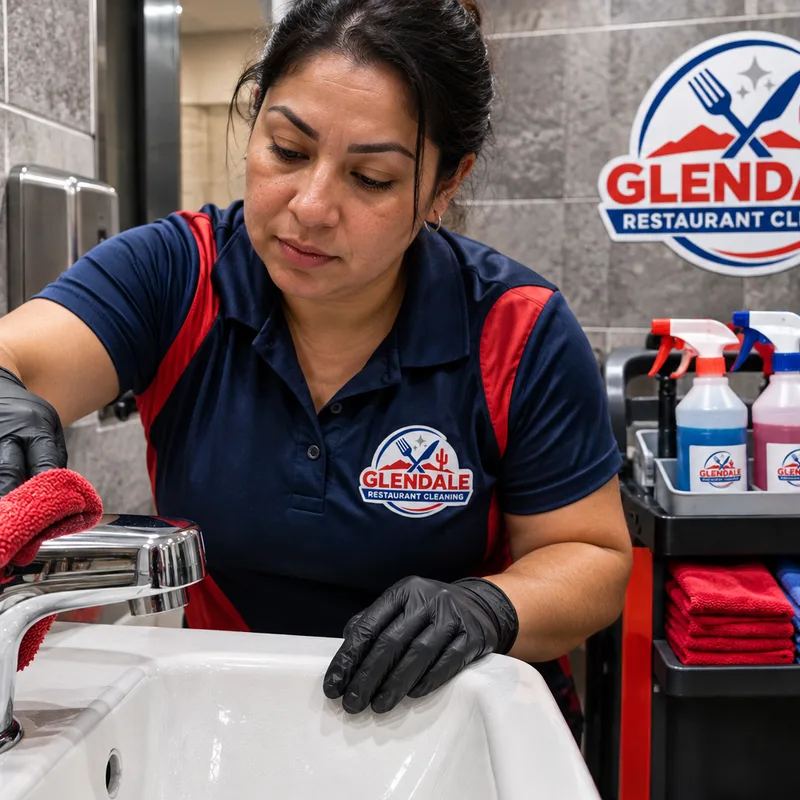
Restrooms need a task list that separates cleaning from disinfection. Soil must first be removed from toilets, urinals, partitions, counters, sinks, mirrors, dispensers, doors, and floors. A disinfectant is then applied to compatible high-touch surfaces and left wet for the contact time stated on its label. Applying and immediately wiping a product may not meet that requirement.
Restaurant Restroom Cleaning in Glendale can also include restocking customer-provided paper goods and soap, checking dispensers, emptying lined waste containers, spot cleaning walls, and addressing floor edges around fixtures. Odor control depends on removing residue at the source, especially around toilet bases, grout lines, drains, and waste containers. Fragrance alone does not correct buildup.
Cleaning records and a clear reporting process help managers respond to leaks, damaged dispensers, clogged fixtures, or supplies that are running low. Cleaning staff can report these conditions, while plumbing repairs remain a separate trade.
Our cleaning process
How a Recurring Cleaning Plan Is Set Up
-
Step 1 of 5
Walk Through the Restaurant
We review dining capacity, floor materials, bar and restroom layouts, back-of-house access, high dusting needs, storage restrictions, alarm procedures, and the times when cleaning can occur.
-
Step 2 of 5
Define the Scope and Frequency
Every-visit tasks are separated from rotating work. Floors and restrooms may need attention each service, while vents, ledges, baseboards, or detailed chair cleaning can follow a scheduled rotation.
-
Step 3 of 5
Confirm Products and Procedures
The plan records surface-sensitive areas, approved products, required disinfectant contact times, color-coded tools, waste procedures, and any equipment that staff must cool, unplug, or move.
-
Step 4 of 5
Start Service and Inspect the Work
The crew follows the checklist within the agreed access window. Quality checks focus on recurring concerns such as floor edges, booth bases, restroom fixtures, entrance glass, and buildup around back-of-house traffic lanes.
-
Step 5 of 5
Adjust for Operations and Seasons
Service can be reviewed after menu changes, renovations, special events, patio use, or periods of increased tracked dust. Changes should be documented so the crew and restaurant manager share the same expectations.
Cleaning for local operating conditions
A Cleaning Program for Glendale Restaurant Conditions
Restaurant Front of House Cleaning in Glendale has to account for more than visible crumbs. Fine airborne dust can settle on chair rails, decorative ledges, vents, bottle displays, and tall fixtures. Entryways near busy commercial corridors may also collect grit that scratches finishes when it is left underfoot. Frequent removal with clean microfiber tools and suitable floor methods is safer than waiting for heavy accumulation.
The cleaning plan should also reflect the restaurant's setting. Downtown Glendale dining rooms may operate in older or adapted commercial spaces where narrow storage areas and mixed flooring require careful equipment selection. Westgate Entertainment District restaurants can experience concentrated traffic around games, concerts, and other events, which may increase restroom use and tracked debris. Arrowhead-area restaurants often combine large dining rooms with active retail traffic, while businesses near the Bell Road corridor may need cleaning windows coordinated around late service and steady vehicle traffic.
These local differences affect access, crew time, and task frequency. They do not change the basic standard: use the right process for the surface, prevent cross-contamination, and inspect the work under normal restaurant lighting before the crew leaves.
Request a CallbackCompare the scope, not just the promise
What to Look For in a Restaurant Cleaning Scope
A useful proposal names the rooms, tasks, frequencies, exclusions, and service window. It should state whether supplies and liners are included, who provides paper products and hand soap, which areas require keys or codes, and how problems are reported. Terms such as “clean dining room” are too broad unless the scope identifies tables, chairs, booths, partitions, floors, ledges, glass, and other expected surfaces.
Ask how the team prevents cross-contamination between restrooms, dining areas, and back-of-house spaces. Color-coded microfiber cloths and dedicated mop tools are common controls. Also ask how workers handle chemical labels, dilution, Safety Data Sheets, and disinfectant contact time. If floors include quarry tile, luxury vinyl tile, sealed concrete, carpet, or natural stone, the proposal should match products and equipment to those materials.
Glendale Restaurant Cleaning is based at 5511 North 51st Avenue, Suite 5, Glendale, AZ 85301. A walkthrough at your restaurant provides the information needed to prepare an accurate scope instead of relying on dining-room size alone.
Scope, scheduling, and preparation
Restaurant Cleaning Questions
How much do Restaurant Cleaning Services cost in Glendale?
Pricing depends on square footage, cleaning frequency, service window, floor materials, restroom count, soil level, and whether front- and back-of-house areas are included. High dusting, floor restoration, first-time buildup, and event-related work can add labor. A walkthrough of the Glendale restaurant is the most reliable way to set a recurring price and document what is included.
Can cleaning be scheduled after the restaurant closes?
Yes, cleaning can often be scheduled after closing or during another low-activity window, subject to crew availability and building access. The plan should account for alarms, locked areas, hot equipment, staff departure times, and any event-driven closing variations common around Westgate Entertainment District.
How often should Restaurant Dining Room Cleaning be performed?
The appropriate frequency depends on daily traffic, operating hours, floor type, patio access, and the tasks restaurant staff complete between professional visits. Guest-contact surfaces, visible debris, and spills require attention throughout operations, while a cleaning crew can handle scheduled floor work, detailed booth cleaning, baseboards, glass, and rotating high dusting.
Do you clean restaurant kitchens and equipment?
Back-of-house cleaning can include agreed floors, washable walls, corridors, storage spaces, and accessible equipment exteriors. Hot equipment, cooking surfaces, hood systems, ducts, fire-suppression components, and internal machinery require separate procedures or specialized vendors. The walkthrough defines those boundaries before service begins.
Can you remove grease from restaurant floors?
Routine grease and food residue can often be treated with a compatible degreaser, proper dwell time, agitation, and thorough removal. Results depend on the floor material, grout condition, finish, and depth of buildup. A small test area is appropriate when the surface or previous coating is uncertain.
What is included in Restaurant Bar Cleaning?
Restaurant Bar Cleaning can include counters, stools, foot rails, cabinet faces, mats, sinks, reachable shelves, touchpoints, and surrounding floors. Bottles, glassware, taps, beverage equipment, and food-contact items may remain the restaurant staff's responsibility unless the written scope assigns a safe and specific procedure.
Do you provide one-time cleaning before an inspection or event?
One-time service may be available when the schedule permits, but it should supplement rather than replace the restaurant's food-safety and maintenance procedures. The scope can prioritize dining areas, restrooms, floors, high dusting, or back-of-house buildup before a Glendale event, reopening, or management review.
A restaurant walkthrough turns general cleaning expectations into a written schedule for each room, surface, and service frequency.
Call for a Free QuotePlan your restaurant cleaning
Keep Every Guest Area Ready for Service
Tell Glendale Restaurant Cleaning about your restaurant, operating hours, floor materials, and problem areas. We will discuss a practical scope for the dining room, bar, restrooms, floors, front of house, and agreed back-of-house spaces.