Restaurant kitchen cleaning in Peoria
Restaurant Kitchen Cleaning Peoria
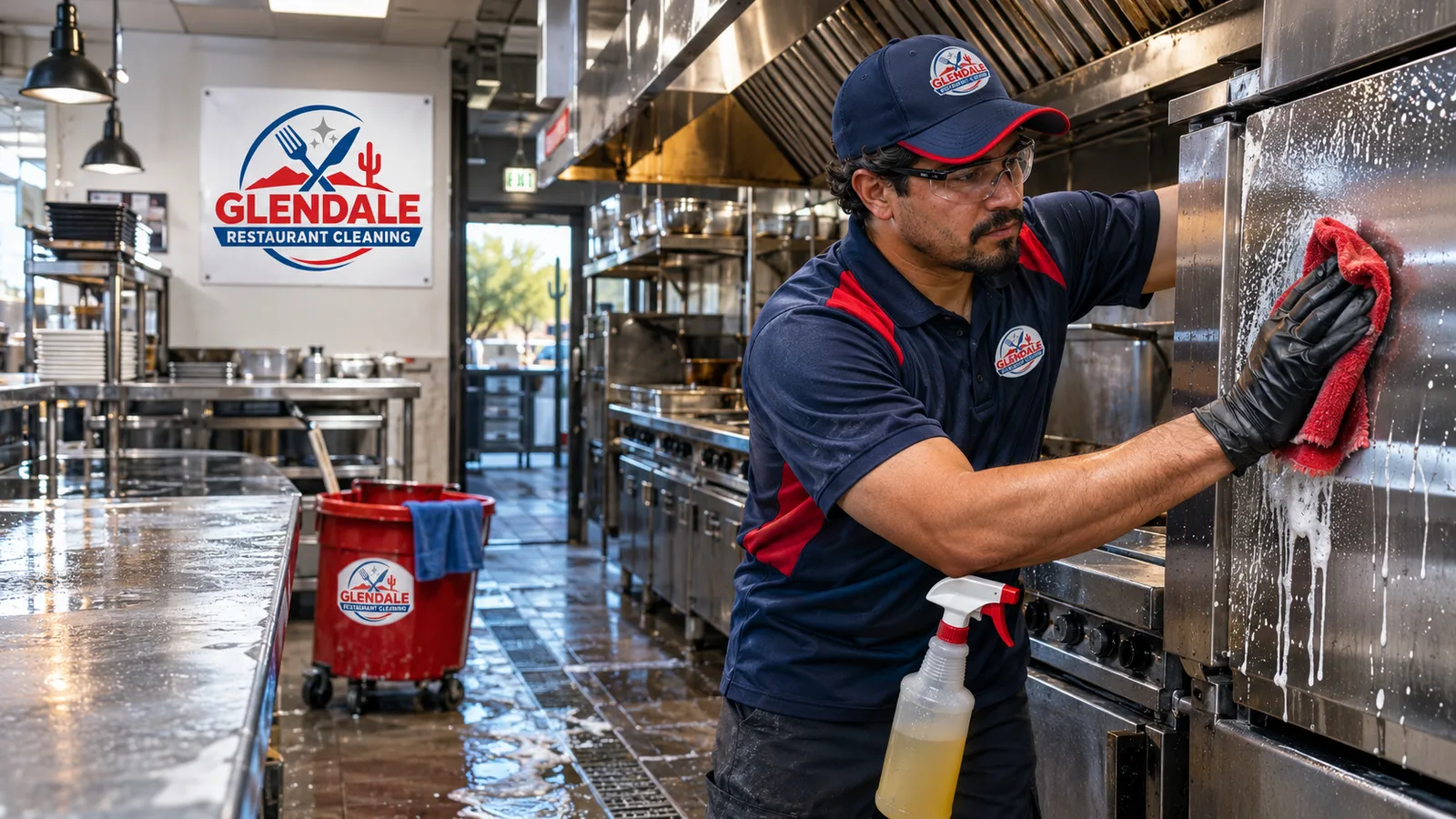
Remove stubborn grease and residue from food-preparation areas, equipment exteriors, floors, and overhead surfaces with a cleaning plan built around your kitchen and operating schedule.
For working commercial kitchens
Scope based on layout and soil level
Planned around operating hours
Deep cleaning for active kitchens
Detailed Cleaning for Working Restaurant Kitchens
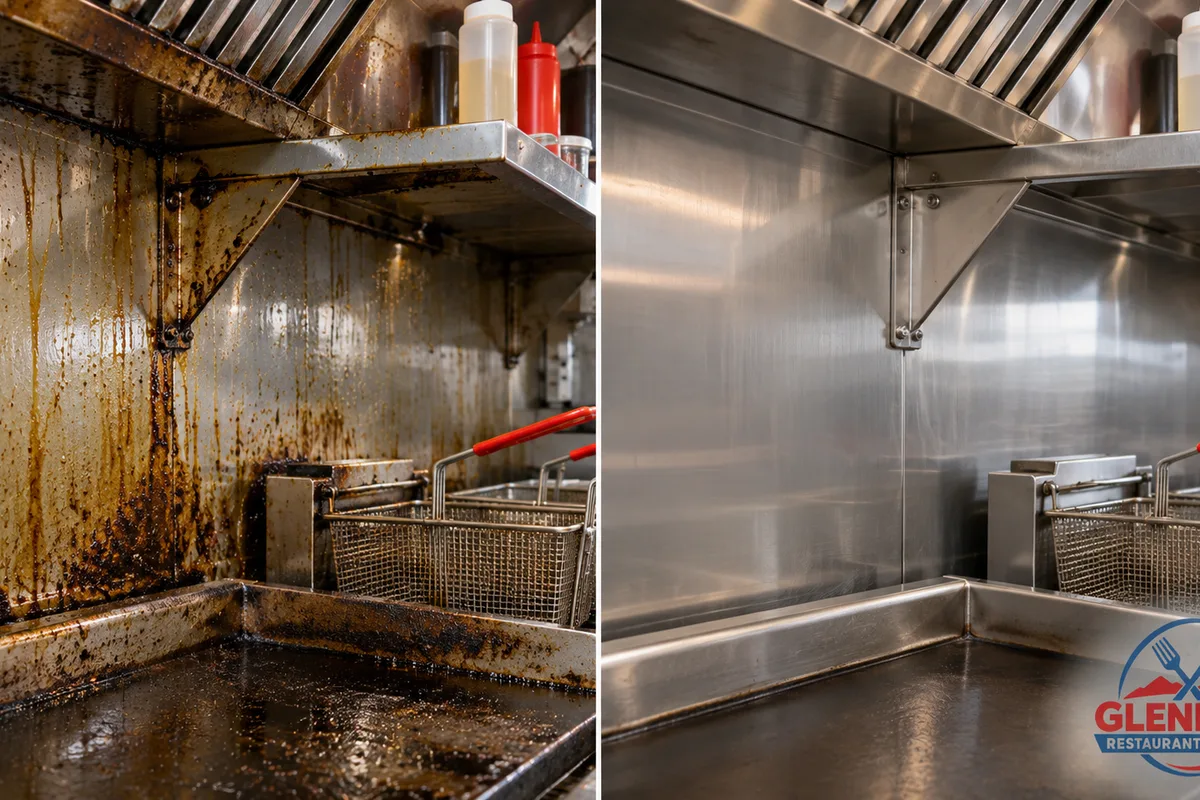
Restaurant Kitchen Cleaning Peoria addresses the buildup that routine shift cleaning may leave behind. Grease mist settles on walls, shelving, pipes, equipment exteriors, and other hard-to-reach surfaces. Food debris can collect at floor edges and around fixed equipment. Over time, those deposits make the kitchen harder to maintain and can contribute to odors, slippery surfaces, and pest-conducive conditions.
Glendale Restaurant Cleaning develops the scope around the kitchen's layout, soil level, access, and hours of operation. For each project, Glendale's restaurant specialists plan the work so managers know which areas are included, what must be moved or protected, and when cleaned surfaces will be ready for normal use. Our base in Glendale provides practical access to restaurants in neighboring Peoria, including commercial areas near Arrowhead and along Bell Road.
A professional deep clean supports, rather than replaces, the restaurant's daily sanitation program. Staff should continue cleaning food-contact surfaces at the required frequency and following the label directions for approved cleaners and sanitizers. We focus on the agreed deep-cleaning tasks, including accumulated grease, detailed floor work, equipment surrounds, and elevated surfaces.
Practical service scope
What Restaurant Kitchen Cleaning Can Cover
Cooking-Line Exteriors
Degreasing can include accessible equipment fronts, sides, control surrounds, backsplashes, nearby walls, and the exterior surfaces of filters or removable components identified in the scope. Cooking appliances must be cool and safely accessible before work begins.
Floors, Edges, and Base Areas
Detailed floor cleaning targets grease film, tracked soil, corners, floor-wall junctions, and accessible spaces around equipment. The method is selected for the flooring and may include degreasing, agitation, controlled rinsing, and recovery of residue.
Preparation and Storage Areas
Shelving exteriors, worktable legs, cart frames, non-food-contact surfaces, and accessible storage-area surfaces can be cleaned after food, utensils, packaging, and sensitive items are removed or protected.
Walls, Doors, and Touchpoints
Washable wall surfaces, doors, handles, switches, and other frequently handled non-food-contact areas can be added to the scope. Product choice depends on the surface and the type of residue.
Cooler and Freezer Detail Work
Cleaning may cover accessible floors, thresholds, shelving, and interior or exterior surfaces when inventory is removed or safely relocated. Ice, standing water, and low temperatures may affect the method and schedule.
Overhead Dust and Grease Deposits
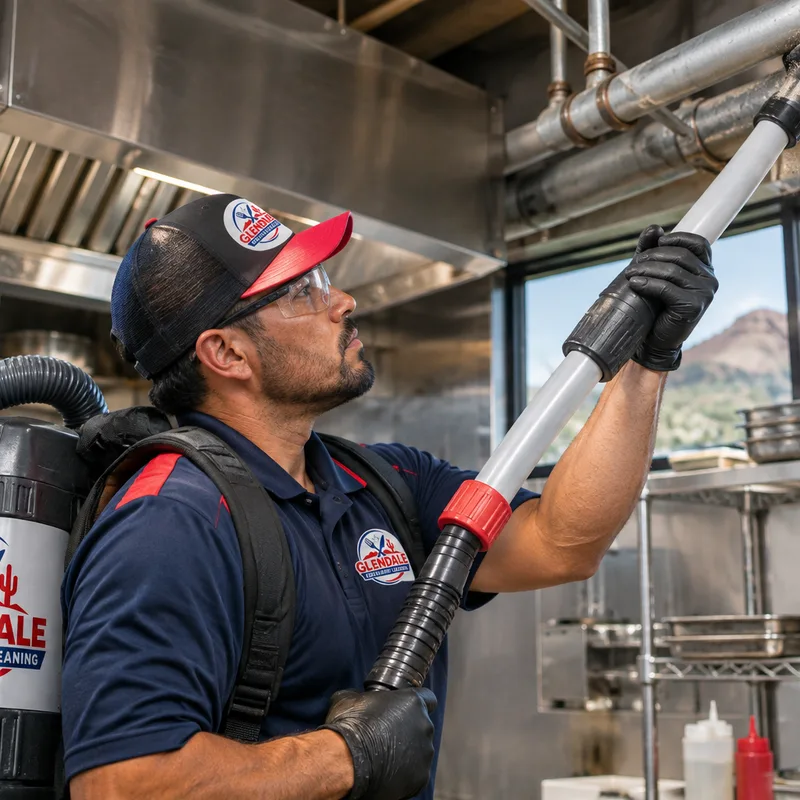
High dusting removes loose dust and buildup from accessible pipes, conduit, vents, ledges, ceiling areas, and the tops of fixtures using controlled tools and appropriate access equipment.
Elevated surface cleaning
Restaurant High Dusting in Peoria
Restaurant High Dusting Peoria focuses on surfaces that are out of reach during normal wipe-downs. Common targets include overhead pipes, conduit, structural members, vent exteriors, ceiling-mounted fixtures, high ledges, and the tops of cabinets or refrigeration units. The exact scope depends on ceiling height, surface condition, and whether fixed utilities or equipment limit access.
Work usually starts at the highest surfaces so dislodged material can be collected during the lower-level cleaning. HEPA-filtered vacuum tools, extension poles, microfiber equipment, and controlled damp wiping may be used according to the soil and surface. Greasy deposits often need more than dry dusting, but moisture and chemicals must be controlled around electrical components, fire-suppression equipment, food, and packaging.
In the Phoenix area's dry climate, airborne dust can enter through doors, loading areas, and ventilation pathways. In a commercial kitchen, that dust may combine with aerosolized grease and cling to overhead surfaces. Periodic high cleaning makes those areas easier to inspect and helps prevent loose residue from falling onto lower surfaces.
Our cleaning process
How the Kitchen Cleaning Process Works
-
Step 1 of 6
Walkthrough and Scope
We review the cooking line, preparation zones, floors, storage areas, overhead surfaces, and access constraints. The written scope identifies included tasks and any exclusions, such as inaccessible equipment interiors or specialized systems.
-
Step 2 of 6
Scheduling and Preparation
Work is planned around production, deliveries, and closing or reopening needs. The restaurant may need to cool appliances, remove exposed food and smallwares, empty selected shelving, and arrange access to locked or restricted areas.
-
Step 3 of 6
Protection and Dry Soil Removal
Sensitive items are covered or relocated as agreed. Loose debris is removed before wet cleaning, and high dusting is performed early so fallen material can be captured during subsequent work.
-
Step 4 of 6
Degreasing and Agitation
Cleaning products are given suitable dwell time, then buildup is agitated with pads, brushes, microfiber tools, or equipment appropriate for the surface. Staff control overspray and avoid mixing incompatible chemicals.
-
Step 5 of 6
Rinse, Recovery, and Detail Cleaning
Residue is rinsed or wiped away as the surface permits. Floors receive final attention, wastewater is controlled, and touchpoints or other specified detail areas are completed.
-
Step 6 of 6
Final Review
The cleaned areas are checked with the manager or designated contact. Any access limitation or condition outside the agreed scope is documented so the restaurant can plan maintenance or a later service.
Cleaning built around your restaurant
A Scope Matched to Your Operation
A counter-service kitchen with a compact cook line does not need the same plan as a full-service restaurant with multiple fryers, long operating hours, and extensive overhead utilities. We assess square footage, equipment density, grease load, ceiling height, floor condition, and the time available between shutdown and reopening. Those details determine staffing, products, tools, and the order of work.
Location also affects scheduling. Restaurants near Arrowhead Towne Center may need cleaning coordinated around busy retail traffic, shared loading access, or late closing hours. Operations along the Bell Road commercial corridor may have narrow overnight windows between dinner cleanup and morning preparation. In Old Town Peoria, older commercial layouts can have tighter equipment spacing or less direct access to high surfaces. These conditions do not prevent detailed cleaning, but they should be identified before the crew arrives.
Regular service can be arranged according to the rate of buildup, while one-time cleaning may suit a reopening, management transition, or overdue deep clean. The right interval is based on actual conditions rather than a fixed schedule for every restaurant.
Defined scope and responsibilities
Clear Boundaries for Safe, Accountable Work
Restaurant cleaning involves hot appliances, wet floors, chemicals, electricity, sharp edges, and elevated access. A responsible plan identifies which equipment must be shut down and cooled, where wet-floor controls are needed, and which overhead areas can be reached safely. Cleaning products should be selected for the soil and substrate, used according to their labels, and never mixed unless the manufacturer explicitly allows it.
Food-contact surfaces require special care. If they are included, they must be washed, rinsed, and sanitized with products and procedures suitable for the establishment's food-safety program. Cleaned food-contact items should be protected from contamination before production resumes. Managers remain responsible for their operating procedures and applicable requirements from the Maricopa County Environmental Services Department.
Kitchen deep cleaning is also distinct from certified exhaust-system cleaning. The interior of exhaust ducts, fans, and other parts of a commercial cooking exhaust system may require a qualified specialist working to applicable fire-safety standards. If those internal components are outside the agreed scope, that boundary should be stated in writing. The same applies to pest treatment, equipment repair, hazardous-material removal, and work inside energized electrical components.
Request a CallbackA walkthrough turns a general cleaning request into a practical scope, with the target areas, preparation duties, access needs, and service window documented before work starts.
Call for a Free QuoteScope, timing, and preparation
Questions Peoria Restaurant Managers Ask
How much does restaurant kitchen cleaning cost in Peoria?
The price depends on kitchen size, grease level, equipment density, overhead access, and the work window. A lightly soiled prep kitchen requires less labor than a busy cook line with fryers, detailed floors, and high dusting. A walkthrough is the best way to establish a written scope and accurate price.
Can cleaning be completed after the restaurant closes?
After-hours scheduling may be available when the required work fits between shutdown and the next preparation period. Peoria restaurants with late service or early deliveries should allow time for equipment to cool, cleaning to be completed, and required surfaces to dry before staff return.
How long does a commercial kitchen deep clean take?
The duration is set by the scope, access, and soil level rather than restaurant square footage alone. A compact kitchen with clear access may be completed in one service window, while a larger operation with heavy buildup or extensive high dusting may need a longer visit or phased work.
Do we need to remove food and kitchen supplies first?
Exposed food, utensils, packaging, and portable equipment generally need to be removed or securely protected before deep cleaning starts. The pre-service plan should state what restaurant staff will move, which shelves must be emptied, and what the cleaning crew will protect.
Is high dusting safe around pipes, lights, and fire-suppression equipment?
High dusting can be performed around accessible overhead utilities when the method accounts for electrical components, fragile fixtures, and fire-suppression equipment. Technicians should avoid disturbing system components, use controlled tools, and report areas that cannot be safely reached or cleaned.
Does kitchen cleaning include the inside of the exhaust hood and ductwork?
Interior exhaust ducts, fans, and related grease-removal systems are not automatically included in general kitchen cleaning. Those components may require certified exhaust-system cleaning under applicable fire-safety standards, so managers should confirm the boundary in the written scope.
How often should a Peoria restaurant schedule deep cleaning and high dusting?
The interval should be based on grease production, operating hours, menu, ventilation, dust entry, and how quickly residue returns. Managers can use visual inspections of ledges, equipment sides, wall areas, floor edges, and overhead utilities to set an appropriate recurring schedule.
Plan your kitchen cleaning
Plan a Cleaner Peoria Restaurant Kitchen
Tell Glendale Restaurant Cleaning about the kitchen layout, problem areas, overhead buildup, and available service window. We will help define the work and preparation needed for a clear, practical cleaning plan.