Restaurant cleaning services in Mesa
Restaurant Cleaning Mesa
Detailed kitchen, dining room, restroom, and floor care scheduled around your operating hours.
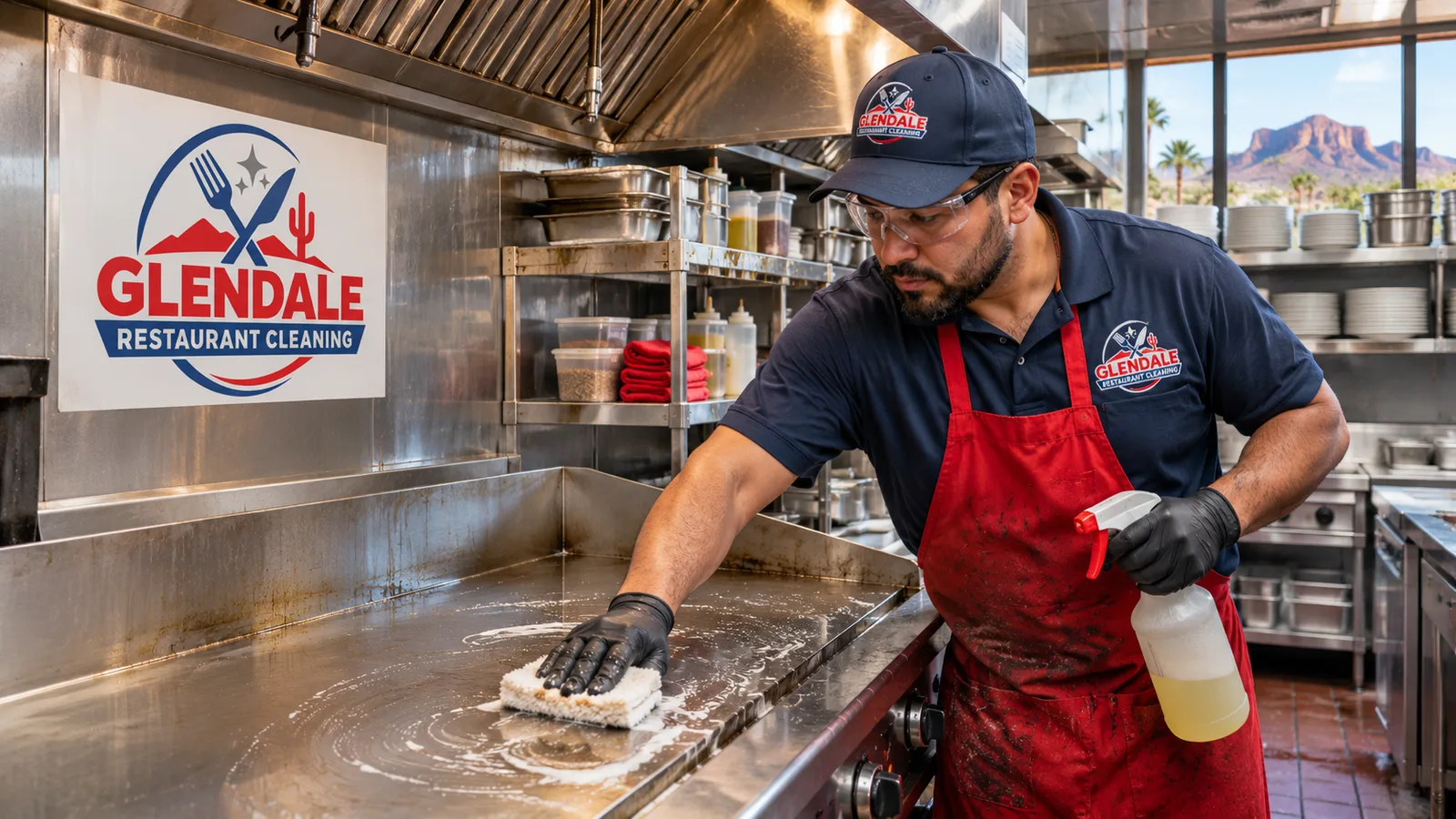
For commercial restaurants in Mesa
Routine and periodic detail cleaning
Planned around operating hours
Cleaning planned for your operation
Reliable Restaurant Cleaning in Mesa
Restaurant Cleaning Mesa businesses can rely on starts with a written scope that reflects the restaurant's layout, service hours, equipment, and busiest work zones. Glendale Restaurant Cleaning handles recurring and deep cleaning for commercial kitchens, dining rooms, restrooms, entry areas, and floors. The work can be planned after closing, before opening, or during another agreed window so the crew does not interfere with food preparation or guests.
Restaurants need more than a quick wipe-down. Grease settles on equipment exteriors, walls, and hard-to-reach edges. Food debris collects beneath movable equipment and along floor transitions. Dining areas need careful attention to tables, seating, high-touch points, and visible glass. Our cleaners use task lists and area-specific methods so front-of-house presentation and back-of-house sanitation receive the right level of attention.
Although our office is in Glendale, an experienced restaurant team in Glendale can arrange service for restaurants in Mesa based on the requested scope and schedule. Tell us which areas need routine care, which need periodic deep cleaning, and when your restaurant is available. We will use those details to prepare a practical plan.
Practical service scope
What Restaurant Cleaning Services in Mesa Can Cover
A restaurant cleaning plan should distinguish routine cleaning from periodic detail work. Routine visits commonly address floors, counters, exterior equipment surfaces, dining furniture, restrooms, doors, and touchpoints. Deep cleaning may add wall and backsplash degreasing, floor-edge work, reachable areas behind movable equipment, baseboards, vents, and buildup around equipment legs or casters.
Commercial kitchen work requires careful product selection. Degreasers need suitable dwell time before agitation and rinsing, while food-contact surfaces require products and procedures appropriate to the surface and restaurant protocol. Color-coded cloths and tools can reduce cross-contact between restrooms, dining areas, and kitchen zones. Safety data sheets should remain available for the chemicals used on the premises.
The scope also needs clear boundaries. Routine janitorial cleaning is different from hood, duct, and exhaust-system cleaning performed under applicable fire-safety requirements. Pest control, grease-trap pumping, and equipment repair are separate services. We identify included surfaces and excluded specialty work in advance so managers know what the crew will complete.
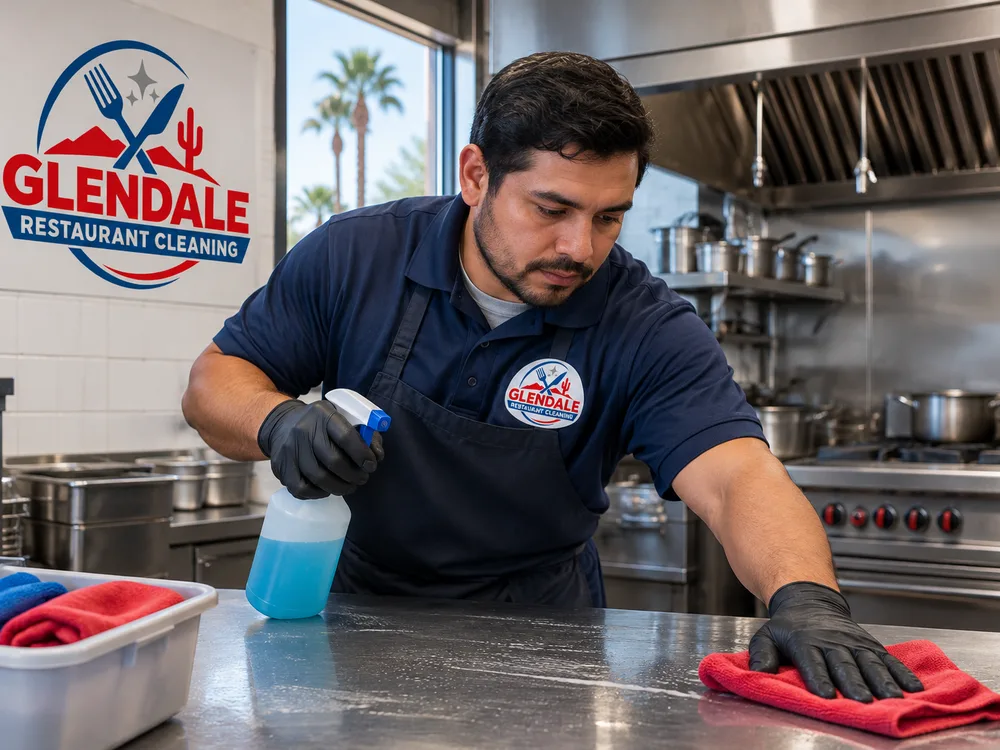
Commercial Kitchens
Cleaning can cover equipment exteriors, prep surfaces, backsplashes, sinks, reachable walls, floor edges, and accessible areas beneath movable items. Heavy grease buildup can be identified for scheduled detail work rather than rushed during a routine visit.
Dining and Guest Areas
Tables, chair backs, booths, ledges, doors, partitions, and other guest-facing surfaces receive close attention. The plan can also include spot cleaning for interior glass and marks near entrances.
Restaurant Floors
Service can include sweeping, vacuuming, mopping, and machine scrubbing where the flooring and access allow it. Methods are matched to tile, sealed concrete, resilient flooring, and other installed surfaces.
Restrooms
Fixtures, dispensers, partitions, mirrors, touchpoints, and floors are cleaned with restroom-dedicated tools. Supply restocking can be incorporated when the restaurant provides the required consumables.
Storage and Employee Areas
Walkways, shelving exteriors, break areas, and other agreed accessible surfaces can be added to the checklist. Food, chemicals, and restaurant property remain handled according to management instructions.
Periodic Detail Work
Scheduled deep cleaning addresses buildup that routine visits cannot reasonably remove. Common priorities include grout lines, baseboards, corners, casters, wall splatter, and reachable spaces around equipment.
Cleaning for local conditions
Mesa Conditions That Affect the Cleaning Plan
Mesa's dry, dusty conditions can leave fine soil near doors, on entry mats, and along floor edges. Monsoon storms can add tracked-in grit and moisture at entrances, so mat care and floor attention may need to increase when storms pass through the area. Large temperature differences between outdoor air and air-conditioned interiors can also make entry glass and doors frequent touchpoints throughout the day.
The correct schedule depends on the operation. Downtown Mesa restaurants may need cleaning windows coordinated with pedestrian activity, events, and compact service areas. Restaurants near the Mesa Riverview and Superstition Springs commercial areas may have larger dining rooms, broad entrances, or parking-lot dust carried inside. Downtown campuses and event venues can also produce sharp changes in traffic. These are planning factors rather than assumptions, so the walkthrough confirms actual access, flooring, and peak-use zones.
Restaurant managers remain responsible for their own food-safety procedures and regulatory obligations. In Mesa, food establishments operate within Maricopa County's environmental health framework. A cleaning company can support a restaurant's sanitation program, but it does not replace employee handwashing, warewashing, temperature control, pest management, or management oversight.
Our cleaning process
How We Set Up Restaurant Cleaning Services in Mesa
-
Step 1 of 4
Review the Restaurant
We discuss the layout, hours, access instructions, flooring, equipment, current problem areas, and any surfaces that require manufacturer-approved products. A walkthrough may be used to assess buildup and confirm which equipment can be moved safely.
-
Step 2 of 4
Define the Scope
The proposed work separates visit-by-visit duties from rotating or periodic tasks. It also records exclusions, supply responsibilities, alarm or key procedures, and the expected condition when the crew finishes.
-
Step 3 of 4
Choose the Service Window
Cleaning is assigned to an agreed time before opening, after closing, or during another low-activity period. Managers should identify any delivery, prep, maintenance, or closing duties that overlap with the cleaning window.
-
Step 4 of 4
Complete and Check the Work
The crew follows the assigned checklist, uses tools designated for each zone, and reports access problems or unusual conditions. Feedback helps refine priorities when operations or traffic patterns change.
Clear expectations before service
Why a Written Cleaning Scope Matters
A useful proposal states what will be cleaned, how often it will be addressed, and what preparation the restaurant must complete. For example, management may need to cool equipment, remove food and small wares, unlock storage areas, or arrange for authorized staff to move heavy items. These details affect safety and how much work can be completed during the available window.
Pricing is shaped by square footage, number of restrooms, floor material, kitchen grease levels, access beneath equipment, cleaning frequency, and whether the first visit requires corrective deep cleaning. A compact counter-service operation and a full-service restaurant with a large cook line do not have the same labor requirements. Late access, restricted parking, and short service windows can also affect staffing.
Before work begins, ask for clear answers about included tasks, supplies, quality checks, keys and alarm codes, and the process for reporting a missed area. A defined scope makes recurring service easier to evaluate and helps prevent routine duties from being confused with specialty exhaust, pest, or equipment work.
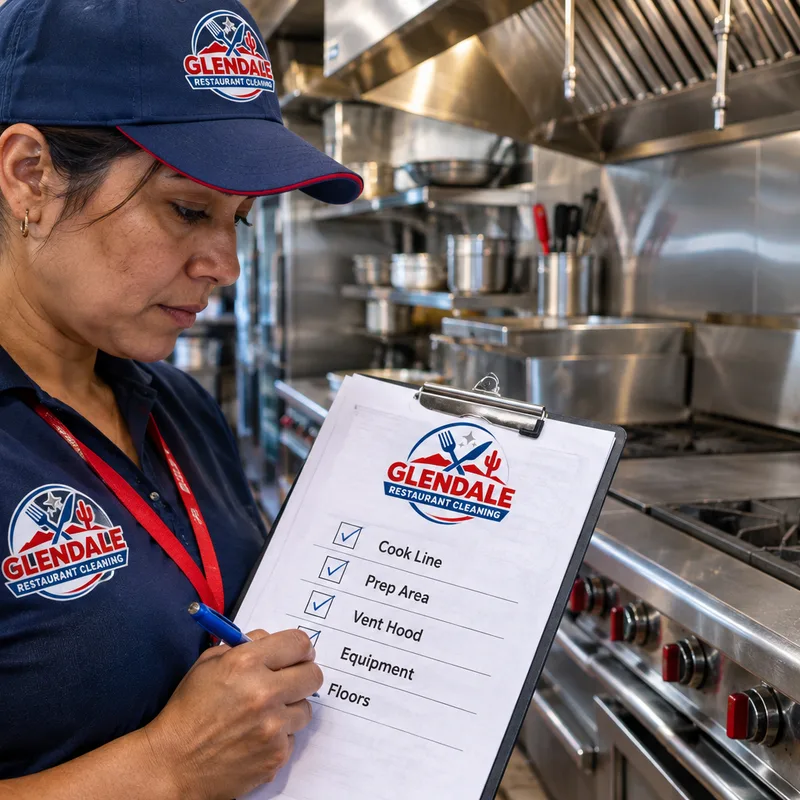
Share your restaurant's layout, operating hours, and priority areas to receive a cleaning plan built around the way your staff uses the space.
Call for a Free QuoteScope, timing, and preparation
Restaurant Cleaning Mesa FAQs
How much does restaurant cleaning cost in Mesa?
Restaurant cleaning is usually quoted after the size, condition, frequency, and requested tasks are reviewed. A first-time deep clean generally requires more labor than an established recurring visit, while a large kitchen or several restrooms will also increase the scope. Floor type, grease buildup, equipment access, service timing, and supply responsibilities all affect the price. A walkthrough provides the information needed for a written quote.
Can restaurant cleaning be completed after closing?
Yes, service can often be scheduled after closing or before opening when access and staffing permit. Mesa restaurants should identify alarm procedures, key control, closing duties, deliveries, and any time limits imposed by the property. Equipment that will be cleaned must have enough time to cool, and food or small wares may need to be removed before the crew arrives.
How often should a Mesa restaurant schedule professional cleaning?
The right frequency depends on cooking volume, guest traffic, flooring, operating hours, and what employees clean during each shift. Busy kitchens may need frequent floor and grease-control work, while baseboards, walls, and accessible spaces behind movable equipment can follow a rotating schedule. Mesa dust and storm-related tracking may require extra entrance and floor care at certain times.
Does restaurant cleaning include hood and exhaust duct cleaning?
Routine restaurant cleaning does not automatically include internal hood, fan, or exhaust-duct cleaning. Those systems require a separately defined specialty scope tied to the equipment and applicable fire-safety requirements. Exterior hood surfaces may be included when listed in the proposal. Managers should confirm in writing whether the work covers exterior degreasing only or a qualified exhaust-system service.
Do we need to move kitchen equipment before a deep clean?
Restaurant staff may need to move small items and arrange safe access around equipment before cleaning starts. Heavy, connected, hot, or gas-powered equipment should only be moved by authorized people using proper procedures. During the walkthrough, the team identifies what is movable, what must remain in place, and which spaces can be reached without disturbing utility connections.
Can you use products approved by our restaurant or franchise?
A restaurant's approved product list and surface-care requirements can be reviewed before service begins. Managers should provide franchise specifications, manufacturer instructions, or prohibited-product lists for sensitive finishes and equipment. The final scope should also state who supplies chemicals, liners, paper goods, and other consumables.
How long does a restaurant deep cleaning take?
A deep clean may take several hours or require more than one service window, depending on the restaurant's size and buildup. Cook-line grease, grout, floor edges, wall splatter, and access beneath equipment are common time drivers. The estimate should account for cooling, preparation, access, and the time by which the kitchen or dining room must be ready for staff.
Plan your restaurant cleaning
Plan a Cleaner Restaurant Around Your Schedule
Describe the kitchen, dining areas, floors, restrooms, and preferred service window. Glendale Restaurant Cleaning will review the details and outline a clear scope for your Mesa restaurant.